

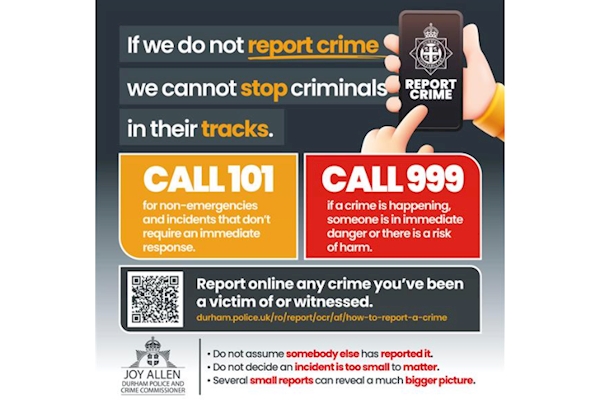
If we do not report crime, we cannot stop criminals in their tracks.

|
||
|
|
||
|
||
|
If we do not report crime, we cannot stop criminals in their tracks. |
||
|
One of the biggest frustrations I have as Police and Crime Commissioner is hearing residents say: “I am not reporting it. What is the point? Nobody cares and nobody comes.” I have heard this at many of the community engagement events I have recently attended. I understand why people feel frustrated, if they have reported something before and do not believe they received the response they deserved. Policing must do better at keeping victims informed, explaining what action has been taken and demonstrating that the information people provide is valued. I will continue to hold the Chief Constable to account for this. But not reporting crime is not the answer. It plays straight into the hands of criminals. If an incident is not reported, then as far as police records are concerned, it has not happened. It does not appear on crime maps, inform intelligence assessments, or help officers identify repeat offenders, vulnerable locations, and emerging patterns. Resources are directed towards the places where we know crime has occurred and intelligence identifies where we need to deploy resources. If offences go unreported, the true level of crime, anti-social behaviour and harm in a community is hidden. An area can appear quieter and safer on police systems than residents know it to be. This must stop. My Police, Crime and Justice Plan is built around commitments: preventing crime and anti-social behaviour, protecting communities, providing a first-class service to victims, reducing reoffending, and bringing offenders to justice. Reporting crime underpins every one of these priorities. We cannot prevent crime if we do not understand where it is happening. We cannot protect communities if repeat locations and patterns remain invisible. We cannot support victims whom the police do not know exist. And we cannot bring offenders to justice without information and evidence. Your report could be the missing piece of the puzzle. A name, description, registration number, photograph, location, time, or pattern of behaviour may connect incidents that appear unrelated. It could help police identify a suspect, secure a warrant, seize an illegal vehicle, safeguard a person, or build the case needed to convict someone causing harm. I am doing everything I can to make reporting easier and more convenient. I am investing in software that helps police join the dots, identify trends, and turn information into action. I am also supporting the recruitment of more police officers and Special Constables to strengthen policing and protect our communities. But this must be a two-way commitment. I need residents to report every crime and share as much information as they safely can. In return, the police must make reporting straightforward, record it properly and improve the feedback given to victims. Call 999 if a crime is happening, someone is in immediate danger or there is a risk of harm. For non-emergencies, report online or call 101. Information can also be given 100% anonymously to Crimestoppers. Do not assume somebody else has reported it. Do not decide an incident is too small to matter. Several small reports can reveal a much bigger picture. Silence protects offenders. Reporting helps us find them, stop them, and bring them to justice. Please report crime and anti-social behaviour because every report matters, and every community deserves to be seen, heard, and protected.
| ||
Reply to this message | ||
|


|